
In 2025, you would expect most Ugandan businesses to be running on modern systems. You’d expect farms to be digitally monitored, retail shops to track stock in real time, restaurants to automate orders, and SMEs to use data instead of guesswork.
But walk into a typical Ugandan shop, factory, school, or farm and the reality hits you:
Paper everywhere.
Manual calculations.
WhatsApp orders.
Verbal instructions.
Confusion masked as “the way we do things.”
It’s not because Ugandan entrepreneurs lack ambition; many are incredibly bold. It’s because they’re carrying their businesses on a foundation built decades ago.
And that foundation is cracking.
This article explores the real reasons digital transformation in Uganda keeps failing — and what it will take for businesses to finally break free.
1. The Silent Cost of “Business as Usual”
Here’s a truth most business owners don’t want to face:
Sticking to the old way of doing things is more expensive than change.
According to the Uganda Bureau of Statistics (UBOS), over 88% of SMEs never make it past their 5th year. Studies from the EAC SME Council show the top culprits:
- poor record-keeping,
- low efficiency,
- and inability to scale.
Not lack of customers.
Not lack of capital.
Lack of systems.
A business without systems is like a car running without a dashboard. You have no idea:
- how much fuel you have (cash flow),
- how fast you’re going (performance),
- or whether the engine is overheating (losses).
Most Ugandan businesses run blind, and they don’t realize it until they hit a wall.
2. The “Copy-Paste” Tech Problem No One Talks About
Too many companies in Uganda are using software that was never designed for our environment.
Imported systems that require:
- strong internet,
- highly trained staff,
- expensive subscriptions,
- and workflows built for markets like Europe or the US.
Businesses buy these systems hoping they’ll solve everything, but instead they get:
- crashed apps,
- staff who can’t use them,
- and systems that don’t match how business is actually done here.
It’s like trying to use a Tesla in Karamoja — sure, it’s a good machine, but it wasn’t built for the terrain.
R-TECK’s entire philosophy is the opposite:
Build systems that actually match Ugandan habits, Ugandan infrastructure, and Ugandan business logic.
That’s why we build tools that work even with:
- low internet,
- low-spec devices,
- USSD access,
- and simple interfaces.
Because transformation doesn’t happen with imported templates — it happens with local understanding.
3. The Human Barrier Nobody Wants to Admit
Most digital projects fail long before the software crashes.
They fail at the human level.
There’s fear.
There’s resistance.
There’s a belief that “technology will complicate business.”
But look closely and you’ll see something deeper:
Technology exposes things manual work hides.
It exposes:
- loss,
- errors,
- inefficiencies,
- missing stock,
- irregular cash flow.
Manual work gives managers the comfort of ignorance; digital work gives them the discomfort of truth.
Ugandan businesses don’t fear tech — they fear what the tech will reveal.
But without facing the truth, growth is almost impossible.
4. The Internet Myth: “We Don’t Have Good Network”
This excuse collapses fast when you consider the numbers:
- Uganda has 27+ million internet users (UCC, 2024).
- Over 72% of mobile connections are smartphones.
- USSD penetration is nearly 98% — meaning even a basic phone can access digital services.
The issue is not the presence of internet — it’s the presence of systems that adapt to the internet we have.
A well-designed Ugandan system:
- loads quickly,
- works offline or in low signal,
- syncs data automatically,
- and uses USSD when needed.
This is why R-TECK prioritizes lightweight design, USSD access, and simple dashboards.
Modern tech without modern problems.
5. The Harsh Reality: Tech Is No Longer Optional
Markets are changing faster than businesses are reacting.
Today’s customer expects:
- instant responses,
- faster service,
- better accuracy,
- and a seamless digital experience.
Restaurants without digital ordering systems are falling behind.
Farms without digital tracking are losing money silently.
Shops without inventory control are bleeding stock.
Businesses without automation are moving slower than their competitors.
Digital transformation is no longer a luxury — it’s the minimum requirement to stay relevant.
6. So What Will It Take for Uganda to Break Free?
A few things must change — and they must change now.
A. Build for Uganda, not copy foreign solutions.
Systems must match our infrastructure, our culture, our workflows, and our challenges.
B. Start small but start smart.
Digitize the processes that matter most — sales, stock, finances — then scale slowly.
C. Support and training must be part of the system.
Not optional. Not a side note. Mandatory.
D. Build systems that grow with the business.
A system shouldn’t feel like a burden; it should feel like the missing limb finally attached.
And that’s exactly where companies like R-TECK come in.
R-TECK’s Stand: Technology Should Fit the Business — Not the Other Way Around
R-TECK is built on one belief:
Innovation only works when it understands reality.
That’s why we create:
- OmulimiNet — designed for Ugandan farms and produce markets
- Dinehub — optimized for local restaurants
- Business management tools for SMEs
- Lightweight websites and automation tools
- USSD-enabled systems for inclusion
- Custom software built with local adaptability
We’re not here to impress with jargon.
We’re here to fix real problems.
Ugandan businesses don’t need more software — they need software that works for Uganda.
The Bottom Line
Uganda isn’t behind because we lack ambition.
We’re behind because our tools aren’t built for the environment we’re running in.
But the tide is shifting.
Local innovation is rising.
Younger entrepreneurs are demanding efficiency.
Businesses are starting to recognize that “manual” is not sustainable.
And R-TECK is stepping forward to help shape that future.
The question is no longer “Should we digitize?”.
The question is “How long can we survive if we don’t?”
Uganda is ready.
The market is ready.
And the right systems are finally here.
Related

2026 Will Expose Weak Businesses — Is Yours Ready?
Most Ugandan businesses will fail in 2026. Not because they lack money. Not because the market isn’t there. Because they are fragile, unstructured, and invisible to their own weaknesses. If your business can’t run without you, it isn’t a business — it’s a job you created for yourself.

Why Most Ugandan Businesses Are Always Busy — But Rarely Growing
The illusion of movementOn any ordinary weekday morning, Ugandan businesses look alive.Phones don’t stop ringing. Staff move quickly, half-running bet...
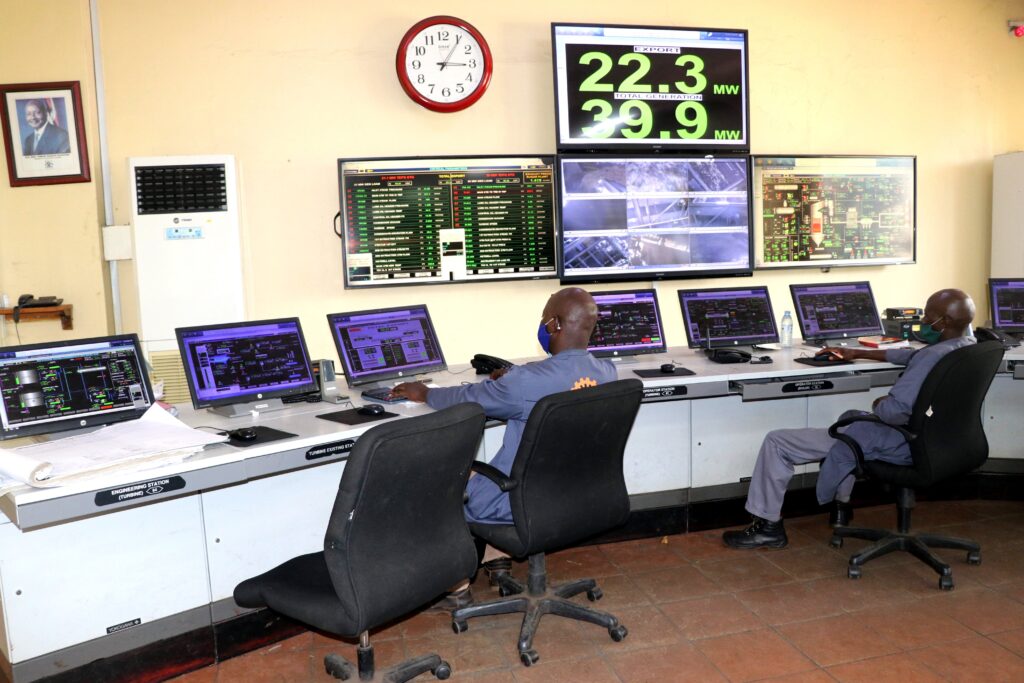
Digital Transformation in Uganda’s Manufacturing Sector: From Theory to Industrial Reality
Digital transformation is redefining how Ugandan manufacturers control costs, manage people, and optimize production. Drawing insights from an Industry 4.0 workshop and a field study at Kakira Sugar Limited, this article explores how real-time data, system integration, and smart operations are turning traditional factories into efficient, competitive enterprises.
Comments (0)